KDP Interior Weight Gain Tracker: Ready-to-Print Layout
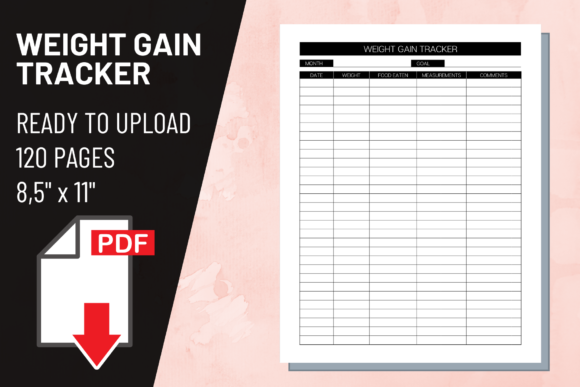
Creating a successful low-content or medium-content book on Amazon KDP often comes down to the utility and clarity of the interior. For publishers targeting the health, fitness, and bodybuilding niches, the KDP Interior Weight Gain Tracker provides a structured, professional foundation that eliminates the guesswork from layout design. This specific 8.5″ x 11″ template is engineered for functionality, offering a clean, distraction-free environment where users can log caloric intake, macronutrients, and body measurements without visual clutter. The aesthetic is deliberately utilitarian yet polished, striking a balance between clinical precision and approachable wellness journaling.
The visual personality of this tracker leans into modern minimalism. Rather than overwhelming the user with decorative elements, the design prioritizes whitespace and clear typographic hierarchy. This is crucial in editorial design for functional books; when a user is tired after a workout or rushing to log a meal, readability must be instantaneous. The layout utilizes a sans serif typeface for headers and data entry fields to ensure legibility at smaller point sizes, while maintaining enough contrast against the white background to prevent eye strain. This thoughtful approach to typography ensures the book feels like a premium tool rather than a generic notebook, directly influencing brand perception and customer satisfaction.
Technical Specifications and Print Readiness
For self-publishers and small business owners, technical compliance is just as important as visual appeal. This package includes a high-quality PDF file at 300 dpi, which is the industry standard for crisp, professional printing. Blurry lines or pixelated text are immediate indicators of low-quality production, but this resolution ensures that every grid line, checkbox, and header prints with sharp definition. The dimensions are set to the popular 8.5″ x 11″ trim size, providing ample writing space for adult users who may find smaller 6x9 journals too cramped for detailed tracking.
A critical detail for KDP formatting is the "no bleed" specification. Many designers struggle with margins and safe zones, leading to rejected uploads or content getting trimmed during binding. This KDP Interior Weight Gain Tracker has been pre-formatted with appropriate safety margins, meaning the content sits comfortably within the printable area without extending to the edge. With 120 pages included, the file offers substantial value, allowing for roughly three to four months of daily tracking or a comprehensive annual overview depending on how the publisher chooses to market it. The ready-to-upload nature of this asset significantly reduces time-to-market, allowing entrepreneurs to focus on keyword research, cover design, and advertising rather than wrestling with InDesign or Canva alignment issues.
Strategic Applications Across Niches
While the primary function is weight gain tracking, the versatility of this interior extends across several adjacent markets. Understanding where this layout works best helps publishers position their products effectively. The clean structure serves multiple audiences beyond general fitness enthusiasts:
- Bodybuilding and Bulking: Users focused on muscle hypertrophy need precise tracking of protein and calorie surpluses. The spacious layout accommodates detailed meal breakdowns essential for this demographic.
- Recovery and Medical Nutrition: Individuals recovering from illness, surgery, or eating disorders often require structured monitoring prescribed by healthcare professionals. The neutral, non-judgmental design supports sensitive health journeys.
- Athletic Performance: Endurance athletes and strength trainers monitoring mass phases benefit from the consistent data entry points, making it easier to correlate nutrition with performance metrics over time.
- Wellness Coaching Lead Magnets: Coaches and nutritionists can use this interior as a branded resource for clients, establishing authority and providing tangible value outside of consultation sessions.
In each of these contexts, the font choices and spacing influence user engagement. A cramped or overly stylized script font might look attractive on a cover but becomes frustrating in a daily log. By sticking to a functional, modern typography style, this interior respects the user’s time and cognitive load, encouraging consistent habit formation.
Evaluating Design Assets for Commercial Success
When selecting a weight gain tracker KDP interior, publishers must evaluate more than just page count. The long-term success of a low-content book depends on the user experience (UX) embedded in the pages. When reviewing this or similar design assets, consider how the visual hierarchy guides the eye. Effective trackers use bolding, line weight variation, and spatial grouping to differentiate between static labels and active input areas. This particular template demonstrates strong UX principles by creating distinct zones for different types of data, preventing the "wall of text" effect that plagues many amateur designs.
Commercial licensing and usage rights are equally vital considerations. Ensure that any design assets you incorporate allow for commercial distribution on platforms like Amazon KDP. This package is designed specifically for that purpose, but savvy publishers should always verify terms when combining multiple resources. Additionally, think about cover pairing. Since the interior relies on a clean, sans serif aesthetic, your cover design should reflect that professionalism. A chaotic or grunge-style cover paired with a minimalist interior creates cognitive dissonance that leads to negative reviews. Consistency between the exterior promise and the interior delivery builds trust and reinforces your brand identity as a publisher.
Enhancing Value Through Customization
Even with a ready-to-print PDF, there are opportunities to differentiate your product in a saturated marketplace. While you cannot alter the core 300 dpi PDF structure without specialized software, you can add value through strategic front and back matter. Consider adding an introductory section that explains how to calculate caloric needs for weight gain, or a reference guide for macronutrient densities. These additions transform a simple tracker into an educational resource, increasing perceived value without requiring complex redesigns of the main tracking pages.
Testing is another practical step often overlooked. Before publishing, print a single proof copy or even a few pages on a home printer at actual size. Digital screens can be deceptive regarding scale and readability. You might discover that the writing lines are too close together for your target audience’s handwriting style, or that the gray tones used for table borders are too light for comfortable reading in low-light conditions. This real-world evaluation separates professional publishers from hobbyists. By treating the KDP Interior Weight Gain Tracker as a foundational component rather than a finished product, you can build a sustainable catalog of health and wellness books that genuinely serve your audience’s needs while meeting the rigorous standards of modern self-publishing.