Evaluating the KDP Movie Review Log Book Interior for Self-Publishing
Selecting the right interior template is a critical step for low-content publishers on Amazon KDP. The KDP Movie Review Log Book Interior serves as a pre-formatted foundation for creators looking to publish a film journal without designing a layout from scratch. This specific resource provides a structured 100-page manuscript tailored for cinephiles and reviewers. When evaluating this product, potential publishers must assess whether the included fields, file formats, and dimensions align with current market demands and their own publishing capabilities. Understanding the specific components and tradeoffs of this interior helps determine if it is a viable asset for a profitable portfolio or if a custom solution is required.
Core Components and Structural Layout
The utility of any logbook interior lies in its field selection. A movie review journal differs significantly from a standard diary or reading log; it requires specific metadata capture to be useful to the end consumer. This KDP Movie Review Log Book Interior includes several distinct data points that define its target audience. Evaluating these fields is necessary to ensure they match searcher intent.
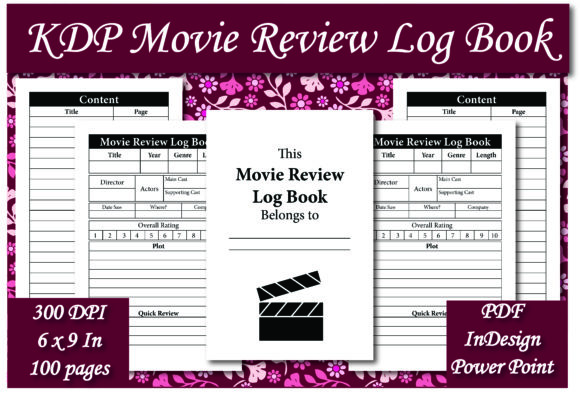
- Ownership Page: The inclusion of a "This Movie Review Log Book Belongs to" page establishes personalization immediately. For gift-givers and buyers, this adds perceived value over a generic notebook.
- Technical Metadata: Fields for Title, Year, Genre, and Length allow users to catalog films systematically. This appeals to data-driven reviewers who track viewing habits over time.
- Credits Section: Separate lines for Director, Actors Main Cast, and Supporting Cast cater to serious film enthusiasts rather than casual viewers. Publishers should note that space allocation here dictates whether the book targets blockbuster fans or indie cinema aficionados.
- Viewing Context: The "Date saw" and "Where Company" fields transform the book from a simple rating system into a memory journal. This dual-purpose functionality can be a unique selling proposition in product descriptions.
- Review Elements: The combination of Overall Rating, Plot summary, and Quick Review offers a balanced structure. It accommodates both star-rating systems and narrative feedback, which is essential for users who may want to reference their thoughts later.
Publishers must verify that these fields provide adequate writing space. In a 6 x 9 inch format, balancing structured data entry with freeform writing area is challenging. If the lines are too sparse, users may feel restricted; if too dense, the book loses its utility as a quick-reference log.
File Format Flexibility and Customization
A significant factor in selecting a KDP template is the ability to modify it. Static PDFs limit long-term viability because trends change and errors cannot be corrected post-purchase. This pack addresses that limitation by providing three distinct file types.
InDesign Files for Professional Editing
The inclusion of an Adobe InDesign file is the most valuable asset for serious publishers. It allows for granular control over typography, margins, and bleed settings. Users can adjust line spacing, change fonts to avoid trademark issues, or add branding elements like headers and footers. However, this requires access to Adobe Creative Cloud and proficiency in professional layout software. Publishers without these skills will not realize the full benefit of this component.
PowerPoint for Accessible Modifications
For creators who lack design software expertise, the PowerPoint file serves as a practical alternative. While less precise than InDesign, PowerPoint allows for basic text edits, image replacements, and layout adjustments. This lowers the barrier to entry, enabling publishers to differentiate their cover or tweak internal prompts without hiring a designer. The tradeoff is reduced typographic control and potential alignment issues when exporting to PDF.
Ready-to-Upload PDF
The pre-sized 6 x 9 inch PDF offers immediate deployment. This is ideal for testing market demand before investing time in customization. However, relying solely on the stock PDF increases the risk of duplicate content penalties or poor customer reviews if other sellers use the identical unmodified interior. Best practice involves using the PDF only as a proof copy or making at least minor modifications to create a unique product.
Strategic Fit and Audience Alignment
Determining whether this KDP Movie Review Log Book Interior fits a publishing strategy requires analyzing specific use cases. No single template suits every business model.
Situations Where This Interior Is a Strong Fit
This template is particularly effective for publishers targeting niche sub-segments of the film community. The specific fields for cast and director make it suitable for student filmmakers, film studies majors, or aspiring critics who need to document technical details alongside subjective opinions. Additionally, the 100-page count creates a substantial spine width, which improves shelf presence and perceived value compared to thinner journals. Creators who already possess editing skills but lack the time to build a layout from zero will find the highest return on investment here. The hybrid file package supports both rapid prototyping and long-term brand development.
Situations Where Alternatives Are Preferable
Publishers focusing on ultra-minimalist aesthetics or highly specialized niches may find this template restrictive. For example, a logbook designed specifically for horror movies might require custom iconography or rating scales (e.g., "Scares" instead of "Stars") that this generalist template lacks. Similarly, those targeting large-format coffee table books will find the 6 x 9 inch dimension inadequate. If a publisher’s primary differentiator is unique interior art or proprietary tracking systems, building a custom interior may yield better long-term results than adapting a pre-made template. Furthermore, creators without access to InDesign or willingness to learn PowerPoint may struggle to differentiate the product sufficiently to compete in saturated categories.
Practical Considerations for Implementation
Beyond the features themselves, operational factors influence the success of using this interior. Publishers should consider the following during their evaluation process:
- Margin Safety: Even with a pre-sized file, always verify gutter margins against KDP’s latest specifications. Template providers occasionally update files, but outdated versions may still circulate. A test print is mandatory before launching.
- Licensing Terms: Confirm whether the license permits commercial distribution on multiple platforms or restricts sales to Amazon KDP only. Some templates prohibit resale of the modified file itself but allow unlimited printed copies.
- Keyword Relevance: The interior fields dictate backend keyword strategy. Since this template includes "Supporting Cast" and "Director," publishers can legitimately target long-tail keywords related to film analysis and director-specific journals, expanding reach beyond generic "movie notebook" terms.
- Competitive Differentiation: Analyze top-selling movie journals in the 6 x 9 category. If competitors offer similar fields, success will depend on cover design, marketing copy, and price point rather than interior uniqueness alone.
Making the Final Decision
The KDP Movie Review Log Book Interior represents a functional middle ground between complete DIY creation and static, unchangeable templates. Its value proposition rests on the balance of ready-to-use convenience and editable flexibility through InDesign and PowerPoint files. For publishers seeking to enter the film journal niche with a professionally structured product, this pack reduces initial development friction. However, it is not a passive income solution; sustainable success still requires market research, customization, and strategic positioning. Evaluate your technical capacity, target audience specificity, and differentiation strategy against the features outlined above to determine if this asset aligns with your publishing objectives. Ultimately, the template is a tool, and its effectiveness depends entirely on how thoughtfully it is adapted to serve a defined reader need.