Hand Drawn Mazes - 10-8-20: Practical Applications for KDP and Creative Projects
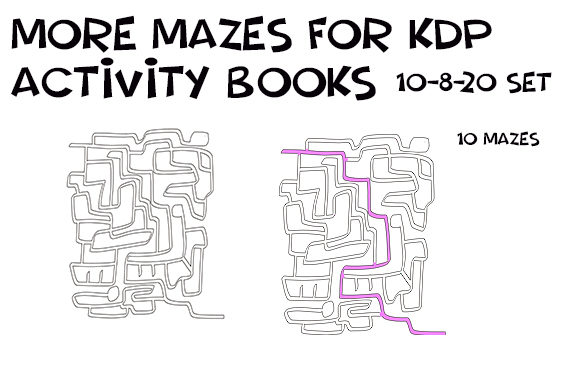
Creating low-content books or educational materials often hits a bottleneck when sourcing unique, high-quality interior assets. The Hand Drawn Mazes - 10-8-20 set addresses this specific friction point by providing a curated collection of ten distinct maze designs created on October 8, 2020. Unlike generic, algorithmically generated puzzles that can feel sterile or repetitive, these assets retain the organic imperfections and charm of hand-drawn artistry. For publishers, educators, and digital creators, this distinction matters because it translates directly to perceived value and user engagement.
This specific asset pack includes both "weave" and "no weave" variations, offering structural diversity that is essential for maintaining reader interest across multiple pages. Weave mazes, where paths cross over and under one another, introduce a layer of visual complexity and spatial reasoning that standard flat mazes lack. Conversely, no-weave options provide cleaner, more accessible challenges suitable for quick activities or younger audiences. Understanding how to leverage these specific variations allows you to tailor your projects to precise audience needs rather than applying a one-size-fits-all approach.
Elevating KDP Activity Books Beyond Generic Content
For Amazon KDP publishers and freelance book designers, the primary challenge in the activity book niche is saturation. Readers are increasingly adept at spotting books filled with recycled, auto-generated content. The Hand Drawn Mazes - 10-8-20 collection serves as a differentiation tool. Because these were originally sketched on US Letter size paper, they possess an authentic line weight and texture that scales beautifully for print. When compiling an adult activity book or a senior cognitive wellness journal, using these hand-rendered assets signals to the buyer that care was taken in the curation process.
The inclusion of solution mazes in PNG format streamlines the production workflow significantly. A common pain point for self-publishers is manually tracing solutions or risking errors by solving complex weaves themselves. Having pre-made solutions ensures accuracy and saves hours of quality assurance time. Furthermore, the availability of blank mazes in both JPG and PNG formats at 300 DPI means you can place them directly into your manuscript without worrying about pixelation or jagged edges, which are frequent complaints in negative book reviews.
Navigating Technical Specifications and Background Variations
Before integrating these files into your layout software, it is vital to understand the technical nuances of this specific set. Users should note that some mazes feature a black background. This is not a defect but a stylistic choice that requires intentional design planning. Black background mazes create a striking, high-contrast aesthetic perfect for "midnight" editions or dark-mode digital products. However, if you are printing on standard white paper for a traditional workbook, you must either select the white-background variants or be prepared to invert the colors digitally. Always review the preview images before finalizing your page sequence to ensure visual consistency throughout your publication.
The 300 DPI resolution is non-negotiable for professional printing. While these files meet that standard, the hand-drawn nature means lines may vary in thickness. In a commercial setting, this variability is a feature, not a bug, but it does require you to check your bleed and margin settings carefully. Ensure that the organic edges of the drawing do not get trimmed off during the binding process, especially since these were designed on full US Letter paper rather than pre-trimmed trim sizes.
Educational and Therapeutic Use Cases
Beyond commercial publishing, educators and therapists find immense practical value in the tactile quality of hand-drawn puzzles. For special education teachers or occupational therapists working on fine motor skills, the difference between a crisp vector line and a hand-drawn stroke can affect accessibility. The slight irregularities in the Hand Drawn Mazes - 10-8-20 set can sometimes be easier for individuals with visual processing differences to track compared to the harsh perfection of computer-generated lines. The "no weave" options are particularly useful for initial skill-building, allowing students to master path-tracking before graduating to the more cognitively demanding weave structures.
In homeschooling environments or after-school programs, these mazes serve as excellent transition activities. They are engaging enough to hold attention but structured enough to provide a sense of calm and order. Because the set includes only ten unique designs, they are best used as premium, standalone challenges rather than filler content. A teacher might use one maze per week as a "Friday Challenge," turning the activity into a ritual rather than disposable busywork. The solution keys allow for quick verification, enabling independent learning where students can self-correct without constant supervision.
Digital Products and Printable Marketing Assets
Freelancers and bloggers creating lead magnets or email newsletter bonuses can utilize these mazes to increase engagement metrics. A downloadable "Mindfulness Break" PDF featuring a hand-drawn weave maze offers higher perceived value than a stock photo or a generic tip sheet. The fact that these are raster images (JPG/PNG) rather than vectors makes them universally compatible; recipients can open them on any device without needing specialized software. For social media managers, the black background variants work exceptionally well as Instagram stories or Pinterest pins, where high contrast stops the scroll and encourages interaction.
When using these for digital distribution, consider the file size and user experience. While 300 DPI is necessary for print, you may want to create optimized web versions for screen-only viewing to reduce load times. The hand-drawn aesthetic pairs naturally with wellness brands, coaching businesses, and creative portfolios. It reinforces a brand identity rooted in authenticity and human connection, distinguishing your freebies from the sea of polished, corporate-looking templates available elsewhere.
Strategic Considerations for Commercial Licensing and Usage
While the artistic and technical qualities of Hand Drawn Mazes - 10-8-20 are strong, users must apply strategic thinking regarding licensing and scalability. With only ten mazes in the set, this is a boutique resource rather than a bulk library. If you are producing a 100-page maze book, this set should be treated as a highlight reel interspersed with other content, not the sole foundation. Attempting to stretch ten designs across a large volume will lead to repetition fatigue for the end-user. Instead, use them as chapter openers, bonus sections, or premium tier content within a larger ecosystem of activities.
Always verify the specific commercial license terms associated with your purchase. Hand-drawn assets often come with different usage restrictions than mass-produced AI content. Some licenses may limit the number of physical copies you can sell or require attribution. Clarifying these boundaries upfront prevents legal headaches down the road. Additionally, because these are dated creations (10-8-20), they carry a timestamp of authenticity. For marketers emphasizing "human-made" or "artist-created" products, this date can actually be leveraged in your copy to prove the provenance of the artwork, countering the growing consumer skepticism toward AI-generated content.
Ultimately, the decision to use Hand Drawn Mazes - 10-8-20 should be driven by your project's need for character and specificity. Whether you are a KDP publisher seeking to improve review ratings through better quality interiors, a therapist needing accessible cognitive tools, or a marketer building a human-centric brand, these assets offer a tangible solution. Success lies in respecting the medium: acknowledging the black backgrounds, leveraging the weave variations appropriately, and treating these ten designs as valuable, finite resources rather than infinite commodities. By aligning the unique traits of this set with your specific operational goals, you transform simple puzzle files into meaningful components of your broader creative or business strategy.