KDP Couples Bucket List Journal Interior Guide
Creating a meaningful connection often requires intentional planning, and for low-content book publishers, providing the right vessel for that intention is key. The KDP Couples Bucket List Journal Interior offers a specialized solution for creators targeting the relationship and self-help niche. Rather than offering generic lined paper, this interior provides a structured framework designed specifically for partners documenting shared goals and future adventures. The design distinguishes itself through a unique aesthetic blend of Maya-inspired tribal patterns and elegant flourish shapes, moving away from minimalist trends to offer something with cultural depth and visual warmth.
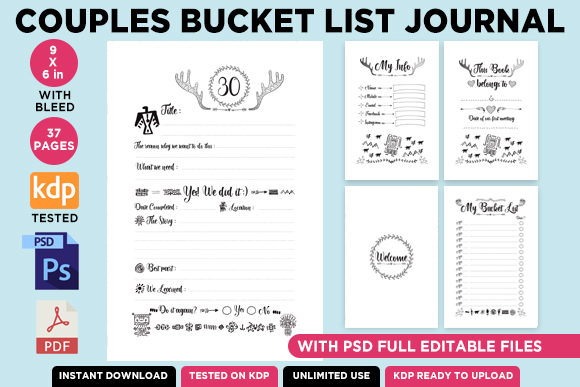
For publishers and designers, the value lies in the balance between artistic specificity and functional utility. This 37-page template is not merely a collection of blank spaces; it is a curated user experience. It includes essential front matter such as a "My Info" page, a welcoming introduction, and an ownership declaration page. These elements transform a simple notebook into a personalized artifact. The inclusion of motivational quotation pages serves a dual purpose: they provide visual breathing room for the user and reinforce the emotional intent of the journal. For the KDP seller, these pre-designed elements reduce the friction of creation while ensuring the final product feels cohesive and professional.
Streamlining Production with Pre-Tested Specifications
One of the most significant technical advantages of this interior is the elimination of formatting guesswork. The file is provided at 6.250 x 9.250 inches, a trim size that sits comfortably between standard trade sizes and offers a premium feel for gift-oriented books. Crucially, the ready-to-print PDF includes proper bleed and has been tested on the KDP website. This testing phase is often where new publishers face rejection or delays due to margin errors or gutter miscalculations. By utilizing a pre-validated file, creators can bypass common upload errors and focus their energy on marketing and keyword research rather than troubleshooting print specifications.
The package also addresses versatility in asset management. While the PDF is optimized for immediate Amazon publishing, the inclusion of high-resolution JPG files opens doors for other platforms. Sellers who wish to offer digital downloads on Etsy, create spiral-bound versions through third-party printers, or use the pages as social media mockups can do so without needing to reconstruct the layout. It is important to note that the JPG files are non-editable, which preserves the integrity of the design but requires sellers to be certain about the layout before purchase. This distinction ensures that users understand the workflow: the PDF is for direct KDP deployment, while the JPGs serve as static assets for broader commercial application.
Enhancing User Engagement Through Structured Content
The commercial success of a low-content book often depends on its perceived value to the end-user. A couple is more likely to purchase and complete a journal that guides them through the process of brainstorming and recording. This interior addresses that need with 30 dedicated bucket list content pages. Unlike open-ended journals that can cause writer's block, these pages provide a consistent space for listing activities, dates, and memories. The repetition of the layout creates a ritualistic aspect to the journaling process, encouraging couples to return to the book regularly.
Furthermore, the specific design choice of Maya tribal elements and flourishes targets a distinct demographic. In a marketplace saturated with boho rainbows or stark modern lines, this aesthetic appeals to buyers looking for something earthy, historical, and sophisticated. It suggests adventure and timelessness, aligning perfectly with the concept of a bucket list. For marketers, this visual hook allows for more specific ad targeting and cover design alignment. When the interior matches the promise of the cover, customer satisfaction increases, leading to better reviews and long-term sales velocity.
Strategic Considerations for Publishers and Creators
While this interior offers substantial benefits, successful implementation requires strategic alignment. Publishers should consider how this specific tribal aesthetic fits within their existing catalog. If your brand focuses exclusively on corporate productivity or pastel nursery themes, this design may create dissonance. However, for those building a portfolio around travel, relationships, wellness, or alternative aesthetics, it serves as a strong complementary product. The "This Bucket List Belongs To" page adds a layer of personalization that generic journals lack, making it an ideal candidate for Q4 holiday sales or Valentine’s Day promotions where gifting is the primary driver.
Creators should also leverage the included motivational quotes as a marketing asset. These quotations can be extracted for use in Amazon A+ Content or social media teasers to showcase the interior's tone. Showing potential buyers that the journal includes inspirational guidance helps justify a higher price point compared to basic notebooks. Additionally, because there are no watermarks on the product, sellers maintain full commercial rights and professional presentation. This clean licensing is vital for building a reputable publishing business where customers trust the quality and originality of the materials.
Navigating Limitations and Future Customization
Transparency regarding file capabilities is essential for setting correct expectations. Currently, the JPG files are non-editable, meaning text placement and graphic elements cannot be altered in raster editors. This limitation protects the design but restricts customization for sellers who want to add their own branding or modify prompts. However, PSD files will be uploaded later once optimization is complete. This upcoming update represents a significant shift in utility. Publishers who require editable layers for translation, rebranding, or structural changes should anticipate this release.
In the interim, the current format supports a "publish-first, customize-later" strategy. Sellers can launch the base version to test market demand and gather initial reviews. Once the editable PSD files become available, they can update their listings with customized variations or expanded editions. This phased approach allows for cash flow generation while waiting for advanced tools. It also demonstrates a commitment to product evolution, which can be communicated to customers as part of a brand narrative focused on continuous improvement.
Maximizing Value Across Different Use Cases
Beyond standard KDP publishing, this interior supports various business models. Freelance designers can use the non-editable JPGs as background textures or inspiration for custom client work, provided they adhere to licensing terms. Educators and workshop facilitators focusing on relationship counseling or goal-setting can utilize the printed PDFs as course materials. The structured nature of the 30 bucket list pages makes it an excellent workbook for couples' retreats or pre-marital counseling sessions. In these contexts, the journal transitions from a consumer product to a professional tool, expanding the potential audience beyond individual buyers.
For bloggers and content creators in the relationship niche, this journal serves as tangible merchandise. Instead of promoting third-party products, creators can sell their own branded journal using this interior as the foundation. The specific page count of 37 pages keeps printing costs low, allowing for healthy profit margins even at competitive price points. When combined with the unique Maya-inspired visuals, the product avoids the "commodity trap" where journals compete solely on price. Instead, it competes on resonance and specific appeal to couples who see their own values reflected in the tribal and flourishing design elements.
Ultimately, the KDP Couples Bucket List Journal Interior functions as both a creative shortcut and a strategic asset. It solves technical hurdles through pre-tested formatting, addresses user needs through thoughtful pagination, and differentiates itself through distinctive artistry. Whether used for immediate publication, cross-platform merchandising, or professional workshops, it provides a solid foundation for serving the couples' market. By understanding both its current capabilities and its future potential with editable files, publishers can integrate this resource effectively into a sustainable low-content book business.