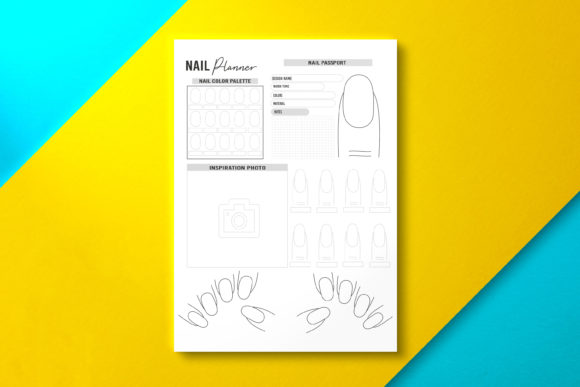
Nail Planner PDF Template: Streamlining Business Organization and KDP Publishing
Effective organization is the backbone of any successful nail technology business or self-publishing venture. A Nail Planner, PDF Template serves as more than just a digital notebook; it is a structured operational system designed to bridge the gap between creative execution and administrative efficiency. Whether you are a working nail technician managing client appointments, an educator creating course materials, or a publisher preparing low-content books for Amazon KDP, having a standardized planning tool is essential. This template ecosystem provides specific dimensions and page counts tailored to distinct workflows, ensuring that the planning process supports rather than hinders productivity.
The utility of these templates extends across three primary phases of professional work: preparation, active management, and archival review. Before a project or business quarter begins, the planner acts as a strategic canvas. During daily operations, it functions as a tactical log for tracking inventory, client preferences, and financial metrics. Afterward, it serves as a historical record for analyzing growth patterns and refining future services. By integrating a dedicated Nail Planner, PDF Template into your routine, you move away from scattered notes and disparate apps toward a cohesive system that centralizes critical business intelligence.
Selecting the Correct Size for Your Specific Workflow
One size rarely fits all in professional planning or publishing. The availability of multiple trim sizes allows users to match the physical or digital format to their specific environment and distribution goals. Understanding the practical application of each dimension ensures you select the asset that best integrates with your existing tools and habits.
Standard Letter and A4 Formats for Desktop Management
The 8.5x11 in and 8.3x11.7 in (A4) options are optimized for desktop use and comprehensive record-keeping. These larger formats provide ample whitespace for detailed service logs, pricing charts, and inventory audits. For nail technicians operating out of a fixed salon location, the 8.5x11 in size aligns perfectly with standard filing systems and desk organizers. It allows for side-by-side note-taking without cramping handwriting. For international publishers or educators, the 8.3x11.7 in A4 variant ensures compatibility with global printing standards and academic expectations. These sizes are ideal when the planner serves as a primary reference document that remains stationary at a workstation.
Portable Dimensions for Mobile Technicians and On-the-Go Planning
Mobility requires a different form factor. The 5.5x8.5 in, 6×9 in, and 5.8x8.3 in templates cater to professionals who travel to clients or need a lightweight companion to digital devices. The 6×9 in size is particularly versatile, fitting easily into standard handbags or tech pouches while still offering sufficient writing area for appointment details and product usage tracking. The 5.5x8.5 in half-letter size offers maximum portability for quick reference, making it suitable for trade shows, workshops, or brief consultations. The 5.8x8.3 in option provides a middle ground often preferred in European markets for personal organizers. Selecting a portable size reduces friction, encouraging consistent use throughout a busy workday.
The 7x10 in Hybrid Option
The 7×10 in template occupies a strategic niche between portability and spaciousness. This size is frequently chosen by creators who find standard letter paper too cumbersome but smaller journals too restrictive. It offers a balanced aspect ratio that works well for both handwritten planning and digital tablet annotation. For KDP publishers, this trim size often stands out in search results as a premium alternative to the ubiquitous 6x9 or 8.5x11 formats, potentially capturing buyers looking for a unique user experience.
Integration with Digital Tools and Physical Workflows
A PDF template does not exist in isolation. Its value multiplies when integrated with other platforms and physical assets. For digital users, these files import seamlessly into annotation apps like GoodNotes, Notability, or Xodo. The hyperlinked tabs (if included in the design) facilitate rapid navigation between monthly calendars, client profiles, and expense trackers. When using a stylus on a tablet, the predefined layout guides input, preventing messy digital scrawl and maintaining professional aesthetics.
For those preferring analog methods or preparing print-ready files, these templates serve as the master blueprint. Printing the 8.5x11 in version allows for hole-punching and insertion into disc-bound or ring-bound systems. This hybrid approach enables technicians to keep a physical copy at their station while maintaining a digital backup in the cloud. From a publishing perspective, these PDFs are formatted specifically for print production. Ensuring margins, bleed areas, and safe zones are correct within the template prevents costly proofing errors and delays during the upload process.
Leveraging Page Count Variations for Different Outcomes
The depth of content required varies significantly between personal use and commercial publishing. The product suite addresses this through specific page count configurations that align with distinct end-goals.
- Single-File Templates: The individual files for each size (8.5x11, 5.5x8.5, 8.3x11.7, 5.8x8.3, 6×9, 7×10) are designed for flexibility. These are ideal for personal customization, testing market demand, or creating bespoke planners for internal team use. They allow you to assemble a custom page count based on actual needs rather than arbitrary bulk.
- 50-Page Configurations: Available in 6×9 in and 8.5×11 in, these thinner volumes are perfect for quarterly planning, workshop handouts, or starter kits. A 50-page planner feels less intimidating to new users and is cost-effective to print. For KDP authors, this page count creates an affordable entry-point product that can serve as a lead magnet or upsell.
- 110-Page Comprehensive Editions: The 110-page versions in 6×9 in and 8.5×11 in represent full-year or extensive professional journals. This thickness conveys value and durability. For nail techs, 110 pages typically cover 12 months of calendars plus substantial sections for client intake forms, price lists, and annual goal setting. For publishers, this spine width allows for legible text placement, enhancing shelf presence and perceived quality.
Preparing Files for Amazon KDP Upload
For entrepreneurs and publishers utilizing these templates for commercial distribution, technical compliance is non-negotiable. The "Ready KDP upload" designation implies that the interior file meets Amazon’s stringent manufacturing specifications. However, successful integration requires verification on your part. Always cross-reference the selected PDF size with your KDP book settings. If you choose the 8.5x11 in Nail Planner, ensure your KDP trim size is set exactly to 8.5x11 inches. Mismatches here result in rejection or distorted printing.
Cover creation must also account for the specific page count. A 50-page book has a significantly different spine width calculation than a 110-page book. Utilize the KDP Cover Calculator with the exact page count of your chosen PDF template to generate the correct cover dimensions. Additionally, review the PDF in full resolution before uploading. Zoom to 100% to verify that all lines are crisp and text is legible. Blurry interiors lead to poor reviews, regardless of how useful the content structure is. By treating the template as a production-ready asset rather than a rough draft, you streamline the path from file selection to live listing.
Operational Best Practices for Long-Term Use
Consistency transforms a static PDF into a dynamic business asset. Establish a ritual for updating the planner. For nail technicians, this might mean spending five minutes post-appointment to log product usage and client feedback while the details are fresh. For publishers, it involves version control; always maintain a master unedited file separate from any customized copies. This prevents accidental overwrites and ensures you always have a clean source for future iterations.
Consider the lifecycle of the data recorded in your Nail Planner, PDF Template. Information captured in weekly logs should eventually migrate to monthly summaries and annual reviews. Design your workflow to facilitate this aggregation. If using digital tools, utilize copy-paste functions or export features to move data into spreadsheets for deeper analysis. If using print, schedule monthly review sessions to transcribe key metrics into a master ledger. This practice ensures that the planner serves as an active tool for decision-making rather than a passive repository of forgotten tasks.
Quality control extends beyond the initial setup. Periodically assess whether the current size and page count still serve your evolving needs. A mobile technician transitioning to a salon suite may need to upgrade from 6x9 to 8.5x11. A publisher finding that customers prefer thicker journals may shift focus from 50-page to 110-page editions. The availability of multiple variations within this product line allows for seamless scaling without forcing a complete reinvention of your planning system. Adaptation is key to sustaining long-term efficiency and relevance in a competitive market.