Supplements and Medication Log KDP: A Customizable Tracker
Managing a complex regimen of vitamins, prescriptions, and over-the-counter remedies requires more than just memory; it demands a reliable system. The Supplements and Medication Log KDP template offers a structured yet flexible solution for tracking health data throughout an entire year. Unlike generic pre-printed journals that force users into rigid formats, this digital-first approach provides editable source files in PDF, PPTX, and Keynote. This accessibility means that whether you are a self-publisher creating a product for Amazon or an individual seeking a personalized health tracker, the barrier to entry is remarkably low. The PowerPoint file, specifically formatted for Google Slides, ensures that anyone with a free web browser can customize the layout without purchasing expensive design software.
Why Audience Needs Dictate Logbook Design
A medication log serves vastly different purposes depending on who is holding it. For a patient managing chronic conditions, the priority is clarity and ease of use during moments of fatigue or stress. For a KDP publisher, the priority shifts to print profitability, margin safety, and market differentiation. Understanding these distinct needs is essential when evaluating or modifying this 109-page template.
Healthcare providers and caregivers often look for specific data points that standard logs miss. They need to correlate dosage times with adverse reactions to identify patterns. Conversely, biohackers and fitness enthusiasts may focus less on side effects and more on optimization, tracking stack combinations and timing relative to workouts or meals. A one-size-fits-all printed book rarely satisfies both groups. By utilizing an editable template, users can adapt the "Supplements and Medication Log KDP" resource to match their specific cognitive load and tracking goals, ensuring the tool remains helpful rather than burdensome.
Technical Specifications for Publishers and Creators
For entrepreneurs and self-publishers, the technical foundation of this logbook is designed to minimize risk and maximize royalty potential. The document adheres to strict KDP standards, having been tested in the previewer to ensure compliance. The specifications are precise:
- Trim Size: 6 x 9 inches, a portable standard for health journals.
- Interior: Black and white with no bleed, reducing printing complexity.
- Page Count: 109 pages total, covering 53 weeks for a full year of tracking.
- Printing Cost: Approximately $2.15 USD, allowing for competitive pricing while maintaining healthy margins.
The inclusion of a dedicated branding page allows creators to establish authority and trust. In the saturated low-content book market, adding a professional logo or practice name transforms a generic commodity into a branded asset. Furthermore, the ability to right-click and duplicate pages in Google Slides or PowerPoint gives publishers the agility to create variations. You might produce a "Senior Care Edition" with larger fonts by deleting dense pages and duplicating spacious ones, or a "Clinical Trial Tracker" by adding extra notes sections, all from the same master file.
Functional Layout for Daily Health Management
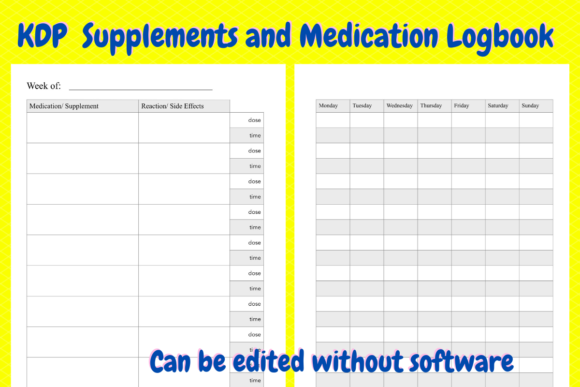
The internal structure of the logbook addresses the practical reality of medication management through a two-page weekly spread. This layout is intentional, separating static information from dynamic daily entries to reduce repetitive writing.
On the left-facing page, users record the medication or supplement name alongside potential reactions or side effects. This serves as a reference anchor. Instead of rewriting "magnesium causes drowsiness" every single day, the user notes it once per week or whenever the regimen changes. This reduces friction and encourages consistent logging. The right-facing page is dedicated to execution, providing space for dose and time for each day of the week. This separation mirrors how healthcare professionals think: distinguishing between the prescription plan (left) and patient adherence/outcomes (right).
For consumers using this as a personal tool rather than a published product, the editability is equally valuable. If you take four supplements in the morning but only one at night, you can adjust the row heights or text boxes in the PPTX file before printing at home or uploading to a print-on-demand service for personal use. This level of customization ensures the log fits your actual life, not just a theoretical average.
Evaluating Suitability Across Skill Levels
Determining whether this Supplements and Medication Log KDP template is right for you depends on your technical comfort and end goal. Beginners to self-publishing will appreciate the Google Slides compatibility. Since many new creators lack Adobe InDesign skills, the ability to edit text, move elements, and manage pages in a familiar interface removes the steepest part of the learning curve. The pre-tested dimensions also provide peace of mind against common rejection errors like margin violations.
Experienced publishers and designers may view this as a foundational base rather than a final product. While the black-and-white, no-bleed interior keeps costs low, advanced users might use the PPTX file as a structural wireframe, exporting it to other software to add custom illustrations or colored tabs. However, they must respect the original 6x9 constraints if they intend to maintain the $2.15 printing cost benchmark.
Educators and health coaches occupy a middle ground. They often need to distribute these logs to clients or students but require specific disclaimers or instructional headers. The editable title page and branding section allow them to insert necessary legal language or coaching philosophies directly into the document. For this group, the value lies in the time saved; creating a compliant, 53-week tracker from scratch would take dozens of hours, whereas adapting this template takes minutes.
Balancing Cost, Quality, and Flexibility
When selecting a health tracking resource, trade-offs are inevitable. Pre-printed books offer immediate tactile quality but zero flexibility. Fully custom design offers maximum flexibility but high cost and time investment. This editable logbook template occupies a strategic middle ground.
The $2.15 printing cost is a significant factor for commercial viability. In the health niche, customers are often price-sensitive. Keeping the retail price accessible increases conversion rates, especially for a consumable item that must be repurchased annually. The no-bleed requirement further simplifies the production process, reducing the likelihood of trim errors that can plague full-bleed interiors.
However, users must weigh the simplicity of black-and-white against the desire for visual engagement. While color coding can aid memory, it drastically increases printing costs on KDP. For most medication logs, high-contrast black and white is actually preferable for readability, especially for older adults or those with visual impairments. The template’s design prioritizes function over decoration, which aligns with the core purpose of accurate health tracking.
Making the Right Choice for Your Project
Ultimately, the decision to use this Supplements and Medication Log KDP resource should be driven by your specific workflow requirements. If you need a compliant, profitable, and easily modifiable foundation for a health journal, the combination of PDF, Keynote, and PPTX files covers nearly every use case. The fact that the PowerPoint file works seamlessly in Google Slides democratizes access, making professional-grade layout editing available to hobbyists and small business owners alike.
Consider your long-term usefulness criteria. A static PDF is a dead end; an editable PPTX is a living asset. As regulations change or as you gather feedback from users, the ability to update the master file and republish is invaluable. Whether you are tracking your own nutrient intake, managing care for an aging parent, or building a publishing portfolio, this template provides the structural integrity needed to succeed without locking you into a format that cannot grow with you.
Before starting, verify your specific needs against the template's features. If you require hourly tracking for acute care, the daily dose section may need expansion via duplication. If you are tracking annual blood work rather than daily pills, the weekly spread might be better replaced with monthly summaries. The tools are provided; the relevance comes from how thoughtfully you adapt them to serve the human behind the logbook.