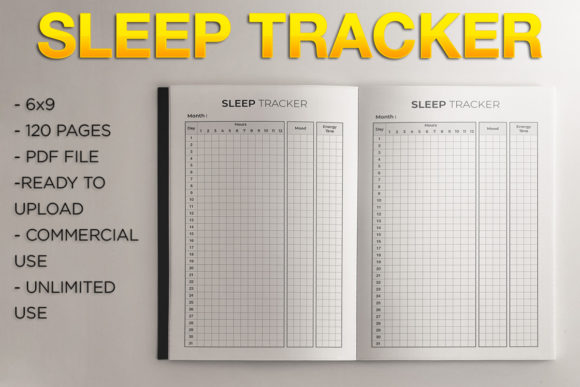
Evaluating the Sleep Tracker L KDP Template for Low-Content Publishing
The low-content publishing market on Amazon Kindle Direct Publishing (KDP) has matured significantly, moving beyond generic journals to specialized functional tools. Among these niche assets, the Sleep Tracker L KDP Template represents a practical entry point for publishers targeting the health and wellness demographic. This specific resource is designed as a 6″ x 9″ no-bleed PDF containing 120 pages of structured tracking layouts. For entrepreneurs, freelancers, and small business owners operating in the digital product space, understanding the utility and limitations of this template is essential before integrating it into a publishing portfolio.
Rather than viewing this asset merely as a pre-made file, it is more accurate to evaluate it as a foundational infrastructure for a sleep hygiene product. The value proposition lies not just in the design itself, but in its technical compliance with KDP standards and its alignment with current consumer interest in quantified self-improvement. This analysis examines the template’s specifications, market viability, and practical application for serious creators looking to expand their catalog with functional health trackers.
Technical Specifications and KDP Compliance
The most immediate advantage of the Sleep Tracker L KDP Template is its adherence to specific printing constraints that often cause rejection or quality issues for new publishers. The 6″ x 9″ trim size is the industry standard for portable journals, offering a balance between writing space and shelf presence. More importantly, the no bleed designation simplifies the upload process and reduces production risks.
In KDP terminology, "no bleed" means all content, including borders, lines, and text, stays within the safe margin zone. This eliminates the need for complex graphic design adjustments to extend artwork to the edge of the page. For publishers managing multiple SKUs or those without advanced design software, this specification ensures consistency across print runs. The 120-page count is another strategic choice; it provides approximately four months of daily tracking or three months with additional note-taking sections, which aligns well with habit-formation cycles without pushing the book into a higher printing cost bracket associated with thicker spines.
The delivery format—a single instant-download PDF—facilitates immediate workflow integration. There are no source files to edit, which acts as both a strength and a limitation. It guarantees that the interior formatting remains intact and professional, but it also means the publisher cannot alter the internal layout. Users must be comfortable with the existing structure before purchase.
Functional Design and User Experience
A sleep tracker succeeds or fails based on its usability at 10:00 PM when the user is tired. Complex layouts lead to abandonment. The Sleep Tracker L KDP Template typically utilizes a streamlined interface focused on key metrics: bedtime, wake time, total hours, sleep quality rating, and influencing factors like caffeine intake or stress levels.
From a user experience perspective, this template prioritizes function over decoration. The grayscale-friendly design ensures that the tracker looks crisp in standard black-and-white printing, avoiding the muddy grays that can plague poorly optimized low-content books. The repetition of the layout across 120 pages creates a rhythmic user experience, allowing the tracker to become an automatic part of the user's evening routine rather than a chore.
However, publishers should recognize that this standardized approach lacks personalization. While the template covers universal sleep metrics, it does not account for niche audiences such as shift workers, parents tracking infant sleep, or individuals managing specific sleep disorders like apnea. It is best positioned as a general wellness tool for adults seeking to improve baseline sleep hygiene rather than a clinical medical device.
Market Positioning and Audience Fit
The target audience for products created with this template extends beyond insomniacs. Current market trends indicate high demand from biohackers, productivity enthusiasts, and corporate professionals managing burnout. These demographics view sleep tracking as a performance metric similar to financial budgeting or project management.
For marketers and creators, this template serves as a vehicle to enter the "wellness productivity" sub-niche. Unlike saturated gratitude journals, sleep trackers offer tangible utility. When listing a book created with this template, successful publishers often pair it with complementary keywords related to cognitive behavioral therapy for insomnia (CBT-I), circadian rhythm optimization, and stress management. The template provides the physical tool, while the publisher’s marketing strategy must provide the context.
Educators and coaches may also find secondary value in this asset. Life coaches focusing on holistic health or corporate wellness programs can utilize books generated from this template as tangible takeaways for clients. In this B2B or service-based context, the consistent, professional appearance of the no-bleed design reinforces the credibility of the practitioner offering it.
Strategic Advantages for Publishers
Integrating the Sleep Tracker L KDP Template into a publishing strategy offers several operational benefits:
- Speed to Market: Eliminating the interior design phase allows publishers to focus entirely on keyword research, cover design, and advertising. A high-quality cover is often the primary differentiator when interiors are templated.
- Risk Mitigation: Pre-formatted templates reduce the likelihood of margin errors, spine miscalculations, and resolution issues that result in rejected uploads or poor customer reviews.
- Scalability: For agencies or freelancers managing multiple accounts, using reliable templates ensures a baseline quality standard across diverse niches.
- Cost Efficiency: As a digital asset with no recurring fees, the ROI depends solely on sales volume. The low barrier to entry makes it suitable for testing new market segments without significant upfront investment.
These advantages make the template particularly suitable for publishers who treat KDP as a volume-based business or those diversifying an existing brand into health-related verticals.
Limitations and Realistic Expectations
Despite its utility, the Sleep Tracker L KDP Template is not a turnkey solution for passive income. The low-content market is competitive, and relying solely on a template without adding external value leads to commoditization. Because the interior is static, differentiation must occur through branding, cover aesthetics, and metadata optimization.
Publishers should also be aware of the "duplicate content" perception. While Amazon does not automatically penalize the use of commercial templates, books that look identical to dozens of others may struggle to gain traction in organic search results. To counteract this, experienced publishers often create unique covers that signal a specific angle—such as "Sleep Tracker for Night Shift Nurses" or "Mindful Rest Journal"—even if the interior remains the standard template. This semantic differentiation helps align the product with specific user intents.
Furthermore, the no-bleed constraint, while safer, limits aesthetic possibilities. Publishers seeking full-page illustrations, edge-to-edge patterns, or immersive artistic experiences will find this template restrictive. It is strictly a utilitarian asset designed for data entry, not creative expression.
Workflow Integration and Best Practices
To maximize the effectiveness of this template, publishers should adopt a systematic approach to deployment:
- Verify Before Upload: Always download the latest version of the PDF and check it against KDP’s current previewer. Platform specifications can change, and ensuring margins remain compliant is the publisher's responsibility.
- Cover Customization: Invest in professional cover design that complements the 6x9 no-bleed interior. Ensure the spine width calculation matches exactly 120 pages; even a slight deviation can cause misalignment during printing.
- Description Optimization: Clearly state in the book description what the tracker includes and excludes. Transparency regarding the layout prevents negative reviews from customers expecting guided prompts or educational content that isn't present.
- A/B Testing: Use the template to test multiple cover concepts. Since the interior cost is sunk, the variable is purely the exterior presentation. Track which visual styles convert best for the sleep niche.
Assessing Long-Term Value
The Sleep Tracker L KDP Template is best understood as a component of a broader publishing ecosystem rather than a standalone product. Its long-term value correlates directly with the publisher’s ability to build a brand around health and wellness. Single-use uploads rarely generate sustainable revenue; however, a curated series of health trackers, journals, and logbooks can establish authority and encourage repeat purchases.
For professionals aged 20–50 building a digital asset portfolio, this template offers a reliable, low-risk foundation. It solves the technical hurdles of book formatting, allowing creators to focus on market research and audience connection. While it lacks the flexibility of custom design, its consistency and compliance make it a pragmatic choice for those prioritizing efficiency and scalability in the competitive landscape of functional publishing. Ultimately, the template is a tool; the success of the final product depends on the strategic intent behind its use.