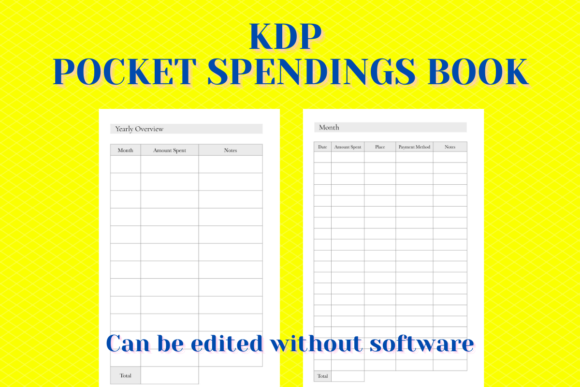
Evaluating the KDP Pocket Spendings Book Template for Low-Content Publishing
For self-publishers and digital product creators, finding a reliable foundation for low-content books is often more challenging than the actual publishing process. The KDP Pocket Spendings Book template addresses a specific gap in the financial tracking niche by offering a pre-formatted, 5x8 inch interior designed specifically for Amazon’s print-on-demand requirements. Unlike generic planners that require extensive resizing or margin adjustments, this resource provides a technical baseline that streamlines production. It serves as both a functional expense tracker for end-users and a scalable asset for publishers looking to expand their catalog without investing hundreds of hours in layout design.
The primary value proposition of this pocket spendings and expenses tracker lies in its balance of utility and customization. It is not merely a static PDF; it includes editable PPTX and Keynote files, with specific formatting optimized for Google Slides. This accessibility removes the barrier of expensive design software, allowing creators to modify branding, add inspirational quotes, or adjust layouts using free tools. For professionals aged 20 to 50 who are managing side hustles, freelance businesses, or personal budgets, the resulting physical book offers a tangible method for financial accountability that apps often fail to provide due to digital fatigue.
Technical Specifications and Print Economics
Understanding the physical constraints of KDP is essential for profitability, and this template has been engineered with those margins in mind. The document measures 5x8 inches, a trim size that strikes an optimal balance between portability and writing space. It contains exactly 101 pages with a black and white interior and no bleed settings. These specifications are deliberate; they keep the printing cost at approximately $2.15 USD per unit. This price point is critical for low-content publishers because it allows for competitive retail pricing while maintaining a viable royalty margin.
The "no bleed" configuration is particularly significant for new publishers. Bleed errors are among the most common reasons for KDP rejection or poor print quality. By keeping all content within the safe zone, this template reduces the risk of manufacturing defects. The file has also been tested on the KDP Previewer, providing a layer of quality assurance that saves creators from the trial-and-error cycle of uploading and correcting proof copies. For entrepreneurs and educators creating resources for students or clients, this reliability ensures that the final product looks professional and functions as intended right out of the gate.
Interior Structure and Functional Layout
The architecture of the KDP Pocket Spendings Book is designed for consistent daily use rather than occasional reference. The 101-page count is structured to maximize utility without adding unnecessary bulk. The interior flow begins with a single title page followed by two blank pages dedicated to branding. This is a strategic inclusion for marketers and business owners who wish to use the book as a lead magnet or branded merchandise. These pages accommodate social media handles, website URLs, logos, or motivational illustrations, transforming a generic tracker into a cohesive brand touchpoint.
Following the front matter, the book includes two yearly overview pages. These allow users to log monthly totals and high-level notes, providing a macro view of spending habits. However, the core of the planner consists of 96 daily tracking pages. Each daily spread includes fields for the date, amount spent, place of purchase, payment method, and transaction notes. This granular level of detail supports behavioral finance principles, encouraging users to pause and reflect on each expenditure. For freelancers and small business owners separating personal and business expenses, the payment method and notes fields are particularly valuable for tax preparation and audit trails.
Editing Workflow and Software Accessibility
One of the most practical strengths of this template is its compatibility with Google Slides. While many KDP templates require Adobe InDesign or PowerPoint, this PPTX file has been formatted to retain its integrity when uploaded to Google Docs. This workflow democratizes access for creators who may not have professional design training or software subscriptions. The process is straightforward: upload the PPTX to Google Drive, open it with Slides, make necessary edits, and export as a PDF. This eliminates font embedding issues and layout shifts that often occur when converting between disparate programs.
This flexibility extends beyond simple text replacement. Because the file is fully editable, users can restructure the daily logs if their specific audience requires different data points. A real estate agent might add a field for "Property Address," while a teacher might add "Grant Code." The ability to customize the interior without breaking the print-safe margins makes this a versatile base for various sub-niches within the financial planning category. However, users should exercise restraint when editing; adding too many graphical elements or heavy ink coverage can increase printing costs or violate KDP’s grayscale standards. Sticking to clean lines and minimal decoration preserves the economic advantage of the original template.
Audience Fit and Practical Application
The KDP Pocket Spendings Book is best suited for specific segments of the adult demographic who value analog organization. Professionals and entrepreneurs often find that digital tracking creates friction; opening an app to log a $4 coffee feels tedious, whereas jotting it down in a pocket-sized notebook takes seconds. This tactile interaction reinforces mindfulness regarding spending. For creators and bloggers selling digital products, this template offers a quick-to-market physical product that complements their existing digital offerings. It serves as an excellent upsell or bundle item for courses on budgeting, debt reduction, or business management.
Educators and financial coaches can also leverage this resource as a teaching tool. Rather than creating worksheets from scratch, they can brand this tracker and distribute it to clients or students as part of a curriculum. The 5x8 size fits easily in backpacks, purses, or glove compartments, making it accessible for on-the-go logging. However, it is important to recognize limitations. This is a cash-flow tracker, not a comprehensive accounting ledger. It does not include balance sheets, profit and loss statements, or investment tracking. Users requiring complex financial analysis will need supplementary tools. Positioning this book correctly as a "daily habit builder" rather than a "complete financial system" manages customer expectations and reduces negative reviews.
Strategic Considerations for Publishers
While the template provides a robust starting point, success on KDP depends on differentiation. Simply uploading the unaltered file puts you in direct competition with every other user of the same template. To create long-term value, publishers should utilize the editable files to establish a unique visual identity. Adding custom illustrations, changing fonts to match a specific aesthetic, or including niche-specific prompts can significantly enhance perceived value. The two branding pages at the front offer prime real estate for this customization, but integrating subtle design elements throughout the daily pages creates a more cohesive user experience.
Quality control remains the publisher's responsibility despite the template's pre-tested status. Always review the exported PDF at 100% zoom before uploading to KDP. Check that text alignment hasn't shifted during the Google Slides conversion and verify that line weights are thick enough to print clearly in grayscale. Thin lines that look fine on screen may disappear in print. Additionally, consider the paper quality implications; standard KDP paper is 55# (90 GSM), which is suitable for pencil and ballpoint but may bleed with gel pens or markers. Including a note about recommended writing instruments in the book’s introduction can improve user satisfaction.
Ultimately, the KDP Pocket Spendings Book represents a pragmatic solution for low-content publishing. It solves the technical hurdles of formatting and margin safety while providing a functional structure that meets real user needs. Its strength lies not in being a finished product, but in being a professionally engineered component that saves time and reduces risk. For the serious hobbyist, freelancer, or publisher, it offers a reliable entry point into the financial tracking niche, provided it is treated as a foundation for creativity rather than a shortcut to passive income. The combination of accessible editing tools, print-optimized dimensions, and practical daily utility makes it a noteworthy asset in the self-publishing toolkit.