Evaluating the Kid Gratitude Journal KDP Template for Low-Content Publishing
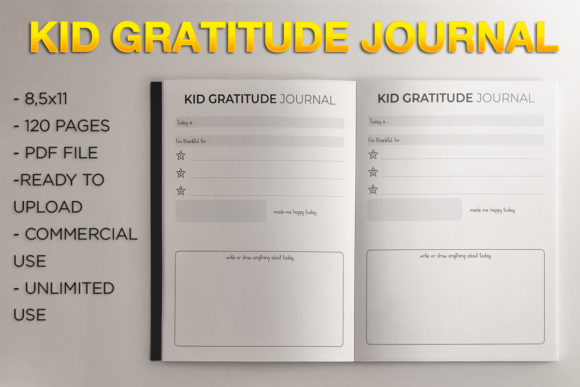
The low-content and no-content book market on Amazon Kindle Direct Publishing (KDP) has matured significantly, shifting from a volume-based gold rush to a quality-driven ecosystem. For publishers, educators, and entrepreneurs looking to enter or expand within the children’s mindfulness niche, the Kid Gratitude Journal KDP Template offers a structured foundation. This specific asset is designed as an 8.5″ x 11″ no-bleed PDF containing 120 pages of pre-formatted interior content. Rather than viewing this merely as a file to upload, it is more accurate to evaluate it as a production accelerator that reduces technical friction while maintaining professional standards.
For creators aged 20 to 50 balancing publishing ventures with other professional commitments, time efficiency is often as valuable as creative potential. This template addresses the dual challenge of technical compliance and age-appropriate design. By providing a ready-to-upload solution, it allows publishers to focus on external value creation—such as cover design, keyword research, and marketing strategy—rather than spending dozens of hours formatting internal margins and gutters.
Technical Specifications and Production Value
Understanding the technical parameters of this Kid Gratitude Journal KDP Template is essential for setting realistic expectations and ensuring a smooth publishing process. The specifications are tailored specifically for Amazon’s current printing requirements for standard black-and-white interiors.
- Trim Size: 8.5″ x 11″. This is the industry standard for children’s activity and journaling books, offering ample space for writing and drawing without being unwieldy for smaller hands.
- Bleed Settings: No Bleed. All content is contained within safe margins. This eliminates the risk of text or graphics being trimmed off during the printing process, which is a common rejection reason for new KDP users.
- Page Count: 120 Pages. This length hits a sweet spot for perceived value in the children's category. It is substantial enough to justify a competitive price point but keeps printing costs low enough to maintain healthy royalty margins.
- File Format: Single PDF. The flattened nature of the file ensures that fonts and layout elements remain consistent across different devices and operating systems during the upload review process.
The "no bleed" designation is particularly significant for practical usability. While full-bleed designs can look immersive, they require precise alignment and often result in higher error rates during the proofing stage. A no-bleed template with proper safety margins provides a reliable baseline, ensuring that the final physical product looks intentional and professionally bound rather than accidentally cropped.
Strategic Fit for Publishers and Educators
This template serves distinct user profiles differently. Evaluating whether it fits your specific workflow requires understanding these nuances.
For KDP Publishers and Entrepreneurs
For those treating KDP as a business asset, the primary value proposition is speed to market. Creating a high-quality 120-page interior from scratch involves decisions regarding line spacing, prompt placement, font licensing, and margin calculations. This Kid Gratitude Journal KDP Template compresses that development cycle into minutes. However, experienced publishers should note that because this is a template, differentiation must occur elsewhere. Since the interior is fixed, your competitive advantage will rely entirely on cover design, niche targeting, and backend keyword optimization. It is best utilized as a base for building a brand series rather than a standalone unique product.
For Educators and Therapists
School counselors, teachers, and child therapists may find this resource valuable for creating classroom sets or therapeutic tools. The 8.5″ x 11″ format allows for easy printing via KDP for small groups without the need for commercial offset printing contracts. In this context, the template acts as a curriculum supplement. The consistency of the prompts helps establish a routine for children, which is critical in social-emotional learning (SEL) environments. Unlike digital printables that vary in quality, a KDP-printed book offers a tactile permanence that reinforces the importance of the gratitude practice.
For Freelancers and Service Providers
Virtual assistants and publishing service providers can use this template to fulfill client orders rapidly. When a client requests a gratitude journal but lacks specific interior preferences, having a vetted, compliant template reduces back-and-forth revision cycles. It serves as a reliable "white label" foundation that can be delivered confidently, knowing it meets platform guidelines.
Practical Usability and Content Effectiveness
Beyond technical compliance, the effectiveness of a gratitude journal depends on its engagement level for the end user: the child. While the specific prompts within this template are standardized, the layout generally supports key developmental needs.
Writing Space vs. Drawing Space: Effective kid journals balance text and visual expression. An 8.5″ x 11″ page allows for generous whitespace. If the template includes dedicated areas for illustration alongside writing prompts, it accommodates varying literacy levels. Younger children can engage through drawing, while older children can utilize the text sections, extending the product's usable age range.
Cognitive Load: The 120-page count suggests a daily or weekly practice spanning several months. For a child, completing a thick book provides a tangible sense of accomplishment. From a publisher's perspective, this length also encourages repeat purchases; once a journal is filled, parents are likely to buy the next volume in a series, provided the branding remains consistent.
Font and Readability: Standard templates typically utilize sans-serif, dyslexia-friendly, or primary-school-style fonts. This is crucial for accessibility. When evaluating this asset, verify that the typography aligns with modern readability standards for early readers. Poor font choices can render even a well-structured journal unusable for its target demographic.
Limitations and Considerations for Long-Term Success
While the Kid Gratitude Journal KDP Template solves immediate production challenges, users must approach it with a clear understanding of its limitations to avoid market saturation issues.
- Homogenization Risk: Because templates are accessible to many, identical interiors exist across the marketplace. Relying solely on the template without adding unique value (custom covers, bonus content, or bundled digital assets) will likely result in poor visibility. Amazon’s algorithm increasingly favors unique customer experiences over generic duplicates.
- Lack of Customization: As a pre-made PDF, you cannot easily alter individual prompts or adjust margins without specialized editing software. If you identify a specific micro-niche (e.g., "gratitude for kids with ADHD" or "bilingual gratitude journal"), this template may be too broad. It works best for general mindfulness niches.
- Cover Dependency: With a fixed interior, the cover carries 90% of the marketing weight. Users must invest proportionally more time and budget into cover design. A generic cover paired with a template interior is unlikely to convert in a competitive search result.
- Platform Policy Awareness: KDP policies regarding duplicate content evolve frequently. Always ensure you are adding sufficient metadata and external differentiation to classify your book as a unique edition rather than mass-produced spam.
Implementation Workflow for Best Results
To maximize the return on this asset, integrate it into a broader publishing strategy rather than treating it as a shortcut.
- Validate Before Uploading: Even though the template is marketed as KDP-ready, always run the PDF through Amazon’s Previewer tool. Check specifically for gutter warnings on the 120-page count, as paper thickness can shift safe zones slightly depending on ink type and paper stock selection.
- Create Series Potential: Use the 120-page structure as Volume 1. Plan subsequent volumes with thematic variations (seasonal, holiday-specific, or age-graduated) to build a catalog. This leverages the initial template investment across multiple revenue streams.
- A/B Test Covers: Since the interior is constant, the cover is your primary variable. Create multiple cover designs targeting different emotional hooks (e.g., playful vs. serene) and test them via ads or organic listing optimization to see what resonates with your specific audience segment.
- Supplement with External Value: Consider creating a companion downloadable PDF or certificate of completion linked via a QR code in the book’s front matter. This transforms a static template product into an interactive experience, increasing perceived value and distinguishing your listing from others using similar interiors.
Final Assessment of Utility
The Kid Gratitude Journal KDP Template represents a functional utility for specific stages of the publishing lifecycle. It excels as a prototyping tool, a baseline for series expansion, and a time-saving resource for professionals who prioritize distribution over ground-up design. Its 8.5″ x 11″ no-bleed configuration reflects a pragmatic understanding of KDP’s technical constraints and the physical realities of children’s book usage.
However, it is not a substitute for market research or creative branding. Success with this template correlates directly with the user’s ability to layer unique value on top of the standardized foundation. For the serious hobbyist, educator, or entrepreneur, it removes the barrier of entry regarding interior formatting, allowing energy to be redirected toward the aspects of publishing that actually drive discovery and sales. When used as a component of a holistic strategy rather than a standalone solution, it proves to be a reliable and efficient asset in the low-content publishing toolkit.